
There's a particular way people describe this one, and it's so consistent I can almost finish the sentence for them. "It feels like there's a pebble under the ball of my foot." Or "like my sock's bunched up, but it isn't." Then comes the burning, or the pins and needles into the toes — and the tell-tale habit of stopping to slip the shoe off and rub the foot.
If that's you, there's a good chance you're dealing with a Morton's neuroma. The reassuring news is that it's not dangerous, and for most people it settles with some fairly simple changes.
What it actually is
A Morton's neuroma is a benign (non-cancerous) thickening of one of the small nerves that runs between the long bones of the foot, out towards the toes. It most often turns up between the third and fourth toes. When that nerve gets squeezed and irritated, you get the burning, the numbness, and that "something's under there" feeling.
It's more common in women, and footwear plays a big role — narrow, pointy or high-heeled shoes squeeze the forefoot and press right on the spot the nerve sits.
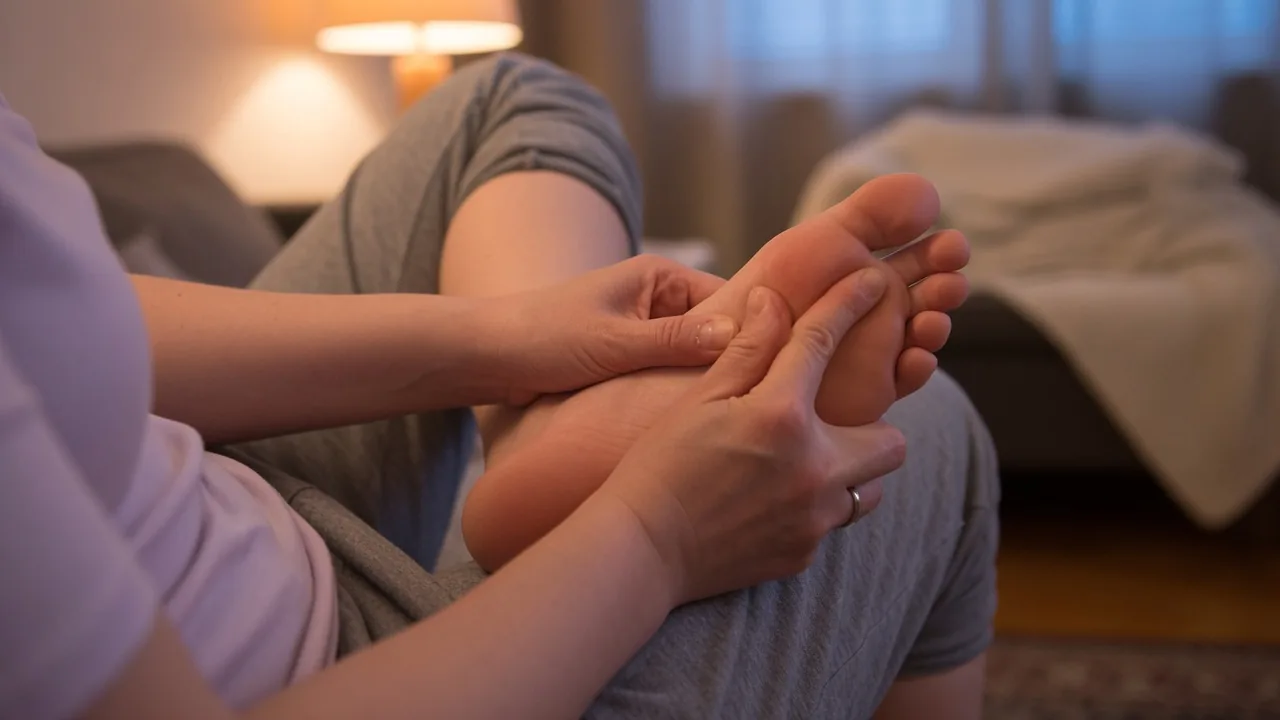
The good news: most cases settle without surgery
People often jump straight to worrying about an operation, but the large majority of neuromas respond to conservative care. The first moves are usually the simplest:
- Roomier, lower shoes — a wider toe box and a lower heel take the squeeze off the nerve
- Offloading — a small pad or an orthotic designed to spread the forefoot bones and lift pressure off the nerve
- Activity tweaks — easing off the things that flare it while it settles
- Sometimes an injection to calm a stubborn, painful nerve
Surgery exists for the minority that don't respond, but it's genuinely a last resort — not the starting point.
That burning in the ball of your foot? We assess and settle forefoot pain across South East Queensland — Caboolture, Beenleigh, Browns Plains and Victoria Point.
Book an appointmentWhy it's worth getting checked
A few other things can cause forefoot pain, so it's worth having it properly assessed rather than assuming. We can confirm what's going on, get your footwear and offloading sorted, and give the nerve the best chance to calm down. If it's really flaring, we'll also help with settling the pain so you can get back to walking comfortably. Left alone in tight shoes it tends to grumble on, whereas a few targeted changes often make a big difference — and it's the kind of thing we handle as part of everyday foot care.
Common questions about Morton's neuroma
What does it feel like?
Burning or sharp pain in the ball of the foot, tingling or numbness in the toes, or a "pebble underfoot"/bunched-sock feeling — worse in tight shoes, better when you take them off.
What causes it?
A benign thickening of a nerve between the toes (usually the third and fourth). Tight, pointy or high-heeled shoes are a common contributor.
Do I need surgery?
Usually not — most settle with roomier shoes, offloading and sometimes an injection. Surgery is a last resort.
Will wider shoes help?
Often, yes — more room and a lower heel takes pressure off the nerve and is one of the first things to change.
Want that forefoot pain sorted? We'll confirm what it is and get you comfortable again. Clinics at Caboolture, Beenleigh, Browns Plains and Victoria Point.
Book an appointmentReferences & further reading
- healthdirect (Australian Government) — Morton's neuroma.
- Mayo Clinic — Morton's neuroma: symptoms and causes.
- Mayo Clinic — Morton's neuroma: diagnosis and treatment.
This is general information, not individual advice. If you've got ongoing forefoot pain, please see a podiatrist so it can be assessed properly.