
I have the same conversation every January, almost word for word. A parent sits down, holds up their kid's foot and says, "It's been there a few weeks. I thought it was a splinter. Where on earth did he get it?"
Honestly, it could have been a few places. The pool deck gets most of the blame, but the bathroom floor at home and the kid sitting next to him in class are just as likely.
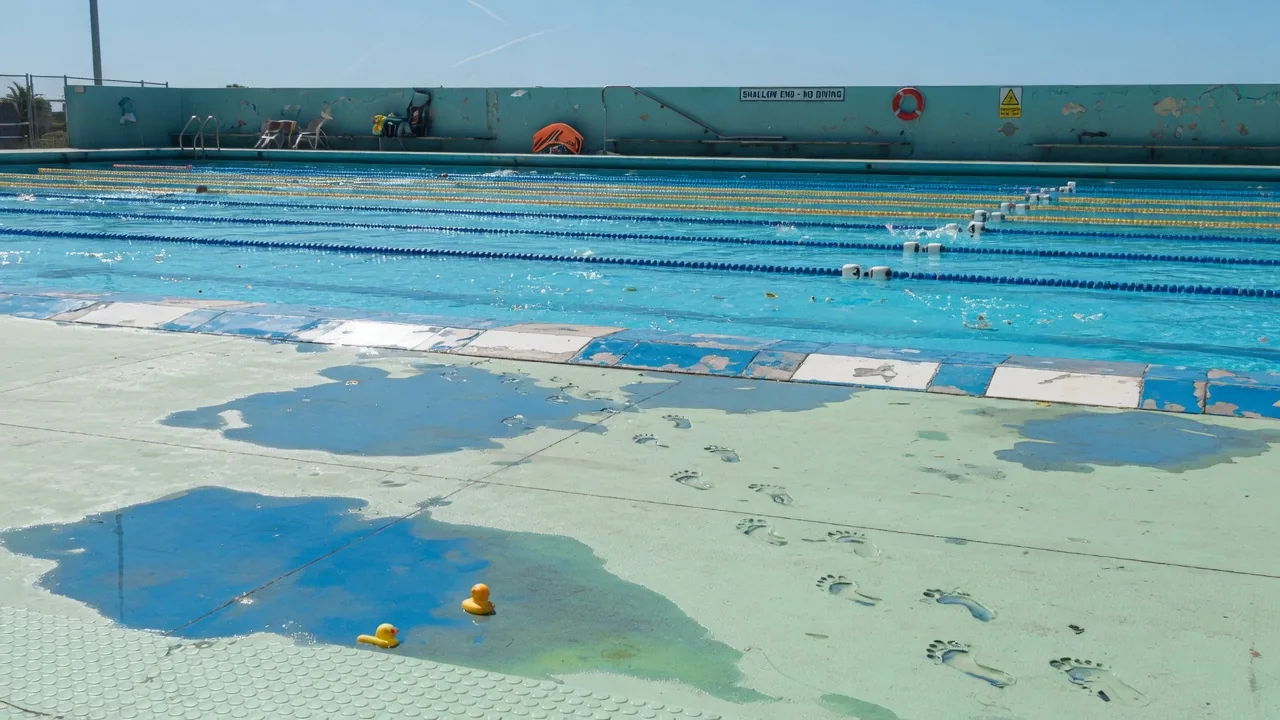
Queensland Term 4 starts on Tuesday 6 October, and state primary schools run a water safety program from Prep to Year 6, which for a lot of schools means swimming in the warmer months. So from this week plenty of young feet will spend time barefoot on wet concrete and change room tiles. If a wart does start, you won't see anything for months, which is why I'm writing this in October and not in January when the phone starts ringing.
Why the timing catches parents out
Plantar warts are caused by human papillomavirus (HPV). The skin types are a different group from the genital types people hear about in vaccination campaigns, and ordinary skin warts don't cause cancer. The virus spreads by direct contact and from surfaces, and it has a much easier time when the skin barrier is broken. Wet feet on rough concrete pick up exactly the kind of small scrapes it needs.
Then nothing happens for a while. The Royal Children's Hospital in Melbourne says it can take up to a year or more for a wart to show after infection. So you can't trace it to one swim, and I wouldn't bother trying.
The pools aren't the whole story either. A Dutch study followed more than 1,000 primary school children for over a year. The children most likely to develop new warts were the ones with family members who had warts, and classmates who had them. Using public places like swimming pools didn't come out as an independent risk in that study. Thongs at the pool are still worth it, but the shared bathmat at home matters too.
Found something on your child's foot? Bring it in and we'll tell you what it is before you start treating it. Caboolture, Beenleigh, Browns Plains and Victoria Point.
Book an appointmentWhat a plantar wart looks like
This is roughly what parents describe to me:
- A rough, slightly raised patch on the sole, often on the ball of the foot or the heel where the weight goes.
- Tiny dark dots in it, like pepper or a splinter that won't come out. Those are small blood vessels, not dirt.
- It hurts more when you squeeze the foot from the sides than when the child stands on it.
- It's flattened rather than lumpy, because body weight pushes it inwards.
- Sometimes it's a cluster of small ones instead of a single spot. That's called a mosaic wart.
- The child has started walking a bit oddly, or on the outside of the foot, and hasn't said why.
That last one gives more kids away than the pain does. Children are very good at quietly changing how they walk and not mentioning it to anyone.
Wart or corn?
I see a fair few feet that have been treated at home for weeks as a corn when it was a wart the whole time, and the reverse. They really are easy to mix up, so this is the comparison I draw for parents.
| Plantar wart | Corn or callus | |
|---|---|---|
| Skin lines | Interrupted. The normal pattern runs around it | Continuous. Lines run straight over the top |
| Dark dots | Often present (small blood vessels) | No dots; may have a clear hard centre |
| Pain | Worse squeezing side to side | Worse pressing straight down |
| Cause | A virus, so it can spread | Pressure and friction, so it won't spread |
| Where | Anywhere on the sole, including soft areas | Only where something rubs or loads |
The skin-lines check is the most useful one you can do at home. Wash the foot, get some good light on it, and look at whether the fine ridges of skin carry on across the spot or bend around it. If they bend around it, think wart.
If it turns out to be a pressure problem rather than a virus, we'll be talking about how the foot is loading and what shoes it's in, not about acid.
Do you have to treat it?
Not always, and I'd rather say so than sell you a course of something.
Warts in children often go by themselves once the immune system catches up. In the same Dutch school study, about half the children with warts were clear of them within a year, and younger children cleared them faster. If a wart doesn't hurt, isn't spreading and isn't bothering your child, watching it is a perfectly reasonable plan.
I lean towards treating when:
- It hurts, or it's changed how the child walks or runs.
- It's spreading, with more spots than there were a month ago.
- It's on a weight-bearing spot where it gets pressed all day.
- It's been there a long time already with no sign of going.
- Brothers or sisters are starting to get them too.
A small wart is usually a simpler job than a big one. One the size of a five cent piece takes a lot longer than one you can barely see.
What the evidence says about treatment
Salicylic acid. This is where I usually start. The Cochrane review of topical treatments for cutaneous warts pooled 85 trials with 8,815 people and found salicylic acid cleared warts more often than placebo. The effect was smaller on feet than on hands. It's also cheap and low risk, which matters on a child's foot.
The hard skin is what usually gets missed at home. A wart on the sole sits under callus the foot has built over it, and acid struggles to get through that. Even the Royal Children's Hospital advice for home treatment is to soak the wart and rub it back with a pumice stone or nail file before putting the paint on. In clinic I pare the dead skin back carefully, apply the acid, dress it, and repeat that at each visit.
Freezing. Most people expect cryotherapy, and the evidence for it on feet is weaker than its reputation. In the Cochrane review, freezing didn't clearly beat placebo, and aggressive freezing worked better than gentle freezing but caused more side effects. A UK trial run largely through podiatry clinics compared the two for plantar warts in people aged 12 and over, and found no difference between freezing and salicylic acid. Only 14% in each group were fully clear at 12 weeks. I'm not against freezing, but on a child's foot it isn't my first choice.
Time. Whatever you use, it's a course of weeks to months. The Royal Children's Hospital says wart paints can take up to three months to work, and those trial numbers show why patience matters. If someone promises you a quick fix for a plantar wart, they're guessing.
Please don't do these at home:
- Cutting or digging it out. The sole is a bad place for a home-made wound. The Royal Children's Hospital says surgery to remove warts is not recommended.
- Picking or scratching. That's how one wart turns into four, and how it reaches a sibling.
- Strong acid on a guess. If it isn't a wart, you've burnt healthy skin for nothing.
- Over-the-counter wart products on a child with diabetes, poor circulation or reduced feeling. Have those feet looked at instead.
Keeping it out of the house, and off the other kids
You can't wrap a child in cotton wool for a whole swimming term, and I wouldn't want you to. A few habits do help, and they also help keep tinea away:
- Thongs or pool shoes from the bag to the water's edge, and in the change room. The Royal Children's Hospital recommends this for public pools and showers.
- Dry properly between the toes. A damp foot in a school sock all afternoon isn't doing the skin any favours.
- Own towel, own socks, own shoes, and that includes between siblings. Given the family finding above, this one matters at least as much as the pool.
- Cover a known wart with a waterproof dressing before swimming, for everyone else's sake as much as your child's.
- Check the soles once a week through swimming term. It takes ten seconds and catches them while they're small.
Parents usually ask next whether their child has to skip swimming. No. Covered up and wearing thongs on the deck, they're fine to get in the water with everyone else, and a term of missed water safety is a much bigger problem than a wart.
Questions I get asked
Is it contagious to the rest of the family?
Yes, although not dramatically. In the Dutch school study, having a family member with warts roughly doubled a child's chance of getting new ones. At home the realistic routes are the bathroom floor and shared towels, so keep towels separate, dry feet well and cover the wart.
My child has about six of them. Is that worse?
It's a mosaic pattern rather than a more serious condition. A cluster covers more area, so treatment usually takes longer. It's worth getting onto rather than waiting out.
Will it leave a scar?
With the usual treatments, scarring isn't common. Cutting warts out is the approach most likely to scar, which is one reason surgery isn't recommended for them.
Can it come back after it clears?
It can, in the same spot or nearby. Immunity to wart viruses isn't lifelong, and a child can become immune to one type and still pick up another. The prevention habits still matter after a wart has gone.
How long will treatment take?
Plan for weeks to a few months, with reviews along the way. I'd rather tell you that at the start than have you give up at week three thinking nothing is happening.
What should I bring to the appointment?
The shoes your child actually wears, anything you've already been putting on it, and roughly when you first noticed it. If you took a photo a month ago, bring that too. A before-and-after is more useful than a memory.
Get it identified before swimming term ends. We see children for warts, heel pain, ingrown nails and growing feet in general across South East Queensland at Caboolture, Beenleigh, Browns Plains and Victoria Point.
Book an appointmentReferences & further reading
- Kwok CS, Gibbs S, Bennett C, Holland R, Abbott R. Topical treatments for cutaneous warts. Cochrane Database Syst Rev. 2012;(9):CD001781.
- Cockayne S, Hewitt C, Hicks K, et al. Cryotherapy versus salicylic acid for the treatment of plantar warts (verrucae): a randomised controlled trial. BMJ. 2011;342:d3271.
- Bruggink SC, Eekhof JA, Egberts PF, et al. Warts transmitted in families and schools: a prospective cohort. Pediatrics. 2013;131(5):928-34.
- Bruggink SC, Eekhof JA, Egberts PF, et al. Natural course of cutaneous warts among primary schoolchildren: a prospective cohort study. Ann Fam Med. 2013;11(5):437-41.
- The Royal Children's Hospital Melbourne. Kids Health Info fact sheet: Warts.
- Al Aboud AM, Nigam PK. Wart. StatPearls. Treasure Island (FL): StatPearls Publishing; 2023.
- Leung AK, Barankin B, Lam JM, et al. Tinea pedis: an updated review. Drugs Context. 2023;12:2023-5-1.
- Department of Education, Queensland. Water safety education and swimming and state school term dates.
- Australian Podiatry Association. podiatry.org.au.
This is general information, not individual advice. If you're not sure what's on your child's foot, have it assessed by a podiatrist or your GP before treating it.