
You know the week. The first proper afternoon storm comes through, the air goes thick, and stepping outside feels like walking into a warm wet towel.
About a fortnight later I start seeing the same thing in the clinic, usually at the end of an appointment booked for something else. The shoes and socks come off and there's white, soggy skin between the little toes, a bit of peeling, and a split in the crease that stings in the shower. The itch is worst when the shoes come off at night.
"Oh, that. It's just a bit of athlete's foot. I've got a cream for it."
Most of the time they've got the diagnosis right. Where it goes wrong is what they do with the cream. This is what I end up telling people every November.
What it actually is
Athlete's foot is a fungal skin infection, medical name tinea pedis. It's very common. A 2022 systematic review of the treatment trials notes that more than 70% of people get it at some point in their lives, and you don't need to play any sport to catch it.
The usual signs, roughly in the order people notice them:
- Itching or stinging between the toes, most often between the fourth and fifth
- White, soft, soggy-looking skin in the gap
- Peeling, and cracks in the toe web that can burn or hurt
- Sometimes a dry, scaly rash spreading onto the sole or the sides of the foot (the "moccasin" pattern)
- Sometimes small itchy blisters
Why it flares now
Fungi like it warm and damp, and a South East Queensland summer supplies both for free.
Picture the inside of a closed shoe on a humid 32-degree day. Your feet sweat, the sweat has nowhere to go, and the sock sits wet against the skin all day. The gaps between your toes are about the warmest, dampest and least ventilated spot on your body. A recent review of tinea pedis lists hot humid climates, heavy sweating and long hours in closed footwear among the risk factors, along with shared showers and public pools.
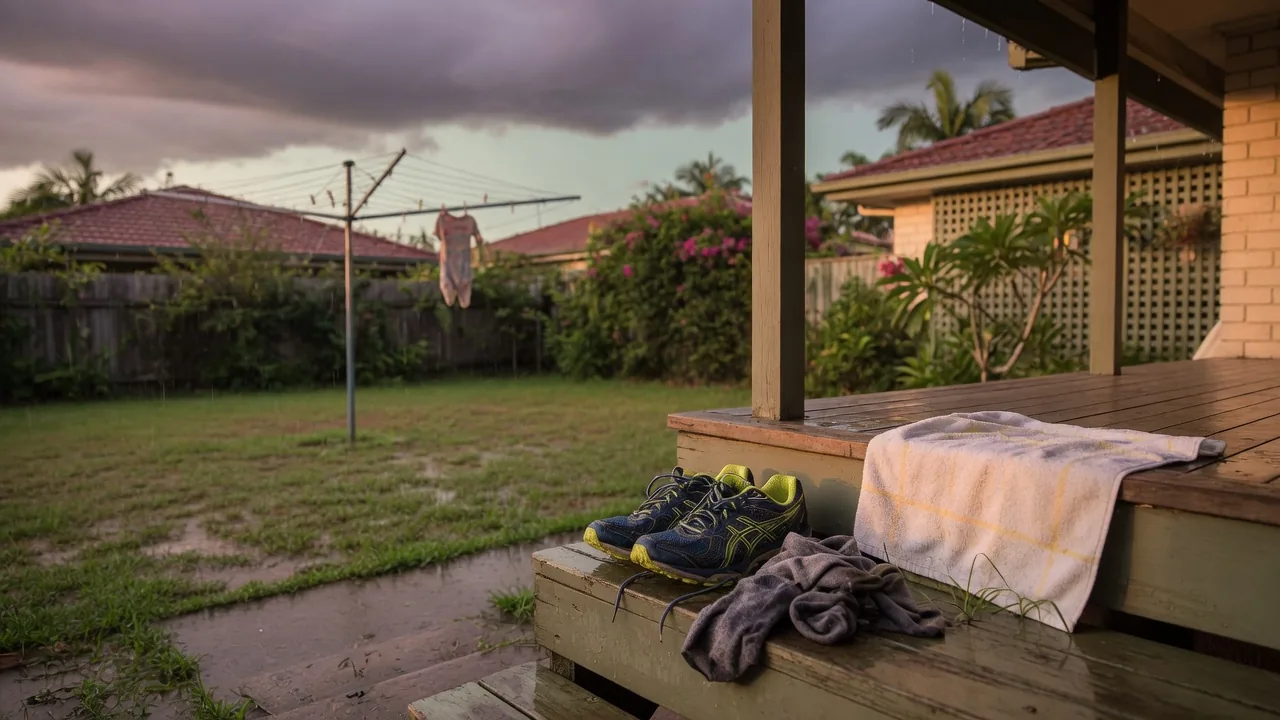
Then the shoe goes in the cupboard overnight, and in this weather it's still damp the next morning. You put it back on and start again.
The people I see it in most at this time of year aren't always who you'd expect. Tradies in steel caps all day. Nurses and shop staff on their feet for a full shift. High school kids in school shoes and polyester socks. And plenty of people who walk the dog after work and leave their runners by the back door.
Itch that won't quit? We'll check what's actually going on between your toes, and look at the nails and shoes while we're there. Clinics at Caboolture, Beenleigh, Browns Plains and Victoria Point.
Book an appointment"The cream worked, then it came back"
If you only remember one part of this post, make it this section.
The antifungal creams from the chemist do work. A Cochrane review of the trials found both main groups of cream cured far more infections than a dummy cream, and a later review found people on topical terbinafine were around four times as likely to clear it as people on placebo. Your pharmacist can help you pick one.
Trouble is, the itch settles well before the fungus is gone. Most people feel better within a few days, decide it's fixed, and put the tube back in the drawer while the fungus is still in the skin. A couple of sweaty weeks later it's back, and now the cream "doesn't work anymore".
Depending on the product and how bad it is, creams are usually used for one to six weeks, and stopping early once the symptoms improve is a well-known reason it comes back. Follow the directions on the pack for the full course, not until the itch stops.
The habits that stop it coming back
The cream deals with this round. Habits are what stop the next one, and none of them take long:
- Dry between the toes. Not just the top of the foot. Get the towel into each gap after every shower.
- Rotate your shoes. Two pairs on alternate days, so each pair gets a full day to dry out. Somewhere airy and in the sun beats the bottom of a wardrobe.
- Change your socks daily, or twice a day if you sweat a lot. Natural fibre is more comfortable in the heat, and a hot wash helps.
- Thongs in shared showers at the gym, the pool and the footy club. That's where a lot of it gets passed around.
- Keep your towel to yourself, and the same goes for socks and shoes.
- When you're home, get the closed shoes off and let your feet air.
Check your toenails while you're down there
Tinea on the skin and tinea in the nail are the same fungus, and it moves between the two. A thick, yellow nail can keep reinfecting the skin however good your cream habit is, and untreated skin tinea can spread to the nail.
If you've got both, they need treating together. I wrote about the nail side of it, and why it takes so much longer, in Thick, Yellow Toenails? Why Spring Is the Time to Deal With Them.
When it isn't tinea
Not everything itchy between the toes is fungal. A soft corn squeezed between the fourth and fifth toes can look soggy and white too. So can dermatitis, a reaction to a new product, or a yeast or bacterial infection. If you've used an antifungal properly for the full course and nothing has changed, stop buying more and get it looked at. That's what general foot care appointments are for.
Why a split between the toes is worth taking seriously
For most people, athlete's foot is an annoyance. Cracked skin between the toes does give bacteria a way in, though. A French study of people admitted to hospital with leg cellulitis found that broken skin in the toe webs was one of the main ways in, and the authors concluded that finding and treating it should be part of preventing cellulitis.
So if the skin between your toes is split or weeping, or the foot becomes red, hot, swollen and sore, see a GP the same day. Spreading redness, warmth, tenderness and swelling are the typical signs of cellulitis.
If you have diabetes or poor circulation, the bar is lower again, and any broken skin on your feet deserves an early look. There's more on that in why summer is the riskiest season for diabetic feet.
Questions I get asked about this
How long does athlete's foot take to clear?
Longer than the itch suggests. The itch often settles within days, but creams are usually used for one to six weeks depending on the product and how bad it is. Stopping when it stops itching is a common reason it comes back, so follow the directions for the full course.
Why does mine keep coming back?
Usually the cream was stopped too early, the shoes never fully dry out, or the toenails are infected and keep reseeding the skin. If it's back more than once or twice, get it assessed rather than buying another tube.
Is all itchy, peeling skin between the toes athlete's foot?
No. A soft corn, dermatitis, a reaction to a product, and bacterial or yeast infection can all look similar. If an antifungal has had a fair go and nothing has changed, the diagnosis is worth checking.
Is it contagious?
Yes. It spreads on wet floors in showers and change rooms, and through shared towels, socks and shoes. It can also spread to your own toenails.
When should I see someone about it?
If it keeps coming back, the cream isn't working, your toenails are changing, or the skin is split, weeping, red, hot or swollen. With diabetes or poor circulation, have any broken skin between the toes looked at promptly.
Had enough of the same itch every summer? We'll confirm what it is, check your nails and shoes, and give you a plan that fits your work and your weather. Clinics at Caboolture, Beenleigh, Browns Plains and Victoria Point across South East Queensland.
Book an appointmentReferences & further reading
- Ward H, Parkes N, Smith C, Kluzek S, Pearson R. Consensus for the treatment of tinea pedis: a systematic review of randomised controlled trials. J Fungi (Basel). 2022;8(4):351.
- Leung AK, Barankin B, Lam JM, Leong KF, Hon KL. Tinea pedis: an updated review. Drugs Context. 2023;12:2023-5-1.
- Crawford F, Hollis S. Topical treatments for fungal infections of the skin and nails of the foot. Cochrane Database Syst Rev. 2007;(3):CD001434.
- Dupuy A, et al. Risk factors for erysipelas of the leg (cellulitis): case-control study. BMJ. 1999;318(7198):1591-1594.
- Raff AB, Kroshinsky D. Cellulitis: a review. JAMA. 2016;316(3):325-337.
- Australian Podiatry Association. podiatry.org.au.
This is general information, not individual advice. Itchy or broken skin on the feet can have several causes, so please have your feet assessed by a podiatrist or your GP.