
If your big toe goes hot, red and swollen overnight, and even the bed sheet hurts, gout is one of the first things to rule out. In Queensland I see a lot of it between late November and January. The heat, the Christmas food and a few extra drinks all play a part.
Every year I get the same phone call in the week after Christmas. Someone is hobbling, usually in thongs or one sock, and they can't get a shoe on. "I went to bed fine," they say. "At two in the morning I woke up and my toe was on fire." Often they think they've stubbed it or that an ingrown nail has got infected. Sometimes that's right. Quite often it's gout.
What gout actually is
Gout is a type of arthritis. When uric acid builds up in the blood, it can form tiny sharp crystals in a joint. The body reacts to those crystals with strong inflammation, and that's the flare.
It's common. Medically diagnosed gout may affect up to 5.2% of adult Australians. The feet cop most of it. In one survey of people with gout, 93% had had a flare in their feet, and the joint at the base of the big toe is the classic spot.
A flare often looks like this:
- Pain that builds fast, often overnight, and peaks within a day
- The joint is red or purplish, shiny, swollen and hot to touch
- You can't stand anything touching it, not even a sock
- Walking is a shuffle on the heel or the outside of the foot
See a doctor the same day if:
- You have a fever, chills or feel generally unwell with a hot, swollen joint. A joint infection can look like gout and needs urgent treatment.
- Redness is spreading up the foot or leg.
- You have diabetes, poor circulation or reduced feeling in your feet. Our diabetes summer foot care guide explains why these feet need care early.
- It's the first time a joint has flared like this. A first episode needs a proper medical diagnosis, not a guess.
Why summer and Christmas set it off
There are three things that tend to pile up at this time of year.
Heat. When you sweat and don't drink enough, the fluid in your body drops. A US study of 632 people with gout found that higher temperatures over the previous two days were linked to about a 40% higher risk of a gout attack. The researchers thought fluid loss was one likely reason. Closer to home, a 2026 University of Western Australia study of 35 years of Perth hospital data found that days above 35 degrees were linked to more hospital admissions for gout flares. In some groups the rise came several days after the hot day, so the flare doesn't always line up neatly with the heatwave.
Food. Prawns, ham, roast meats and seafood platters are high in purines, which the body turns into uric acid. A study of people with gout found the highest purine intake over two days was linked to almost five times the risk of a flare compared with the lowest. Purines from animal sources carried more risk than plant sources.
Drinks. The same research group found that even one to two alcoholic drinks in 24 hours raised the risk of a flare, and two to four raised it further. That held for all types of alcohol, wine included. A long lunch in the sun with a few beers and the seafood is about as gout-friendly a day as you can design.
Big toe sore, swollen or just not right? We'll look at what's going on, help you through it, and point you to your GP when you need one. Clinics at Caboolture, Beenleigh, Browns Plains and Victoria Point.
Book an appointmentWhat to do in a flare
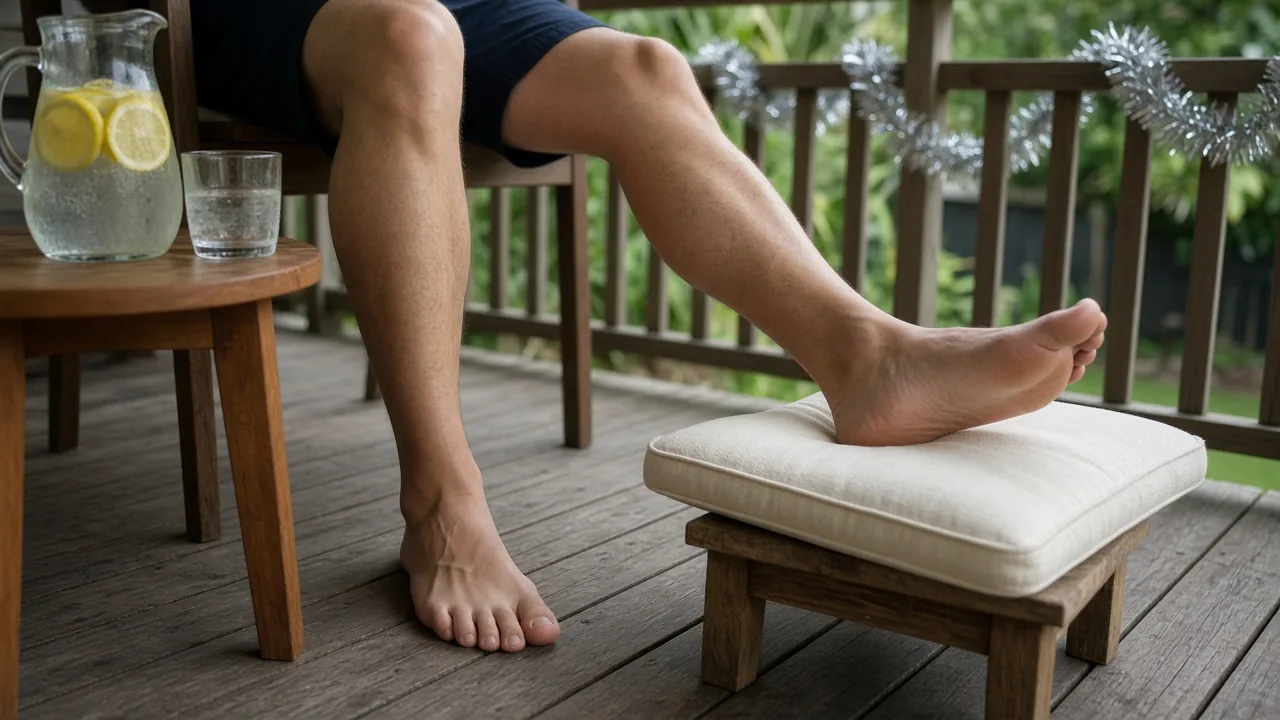
- Rest the foot and keep it raised, ideally above hip height.
- A cold pack wrapped in a tea towel for 15 to 20 minutes at a time can take the edge off.
- Keep the bedding off the toe. A pillow under the sheet at the end of the bed works.
- Drink water, especially if it's hot.
- Go to your GP early, so the flare is treated and you leave with a plan for the next one.
The medicine side belongs with your GP. A review in Australian Prescriber by Brisbane specialists notes that anti-inflammatories, colchicine and corticosteroids are similarly effective for a flare, and your other health conditions guide the choice. For people who keep getting flares, a urate-lowering medicine like allopurinol brings uric acid down over the long term.
Between flares: the bit people skip
Once the toe settles, it's easy to forget about it until next Christmas. I'd push back on that. Diet changes help, but GP guidance in the Australian Journal of General Practice says diet alone will almost never control gout. It also says not to stop allopurinol even after years without a flare. If you've been prescribed it and stopped, have that chat with your GP before summer.
What does help over the holidays:
- Keep a water bottle with you on hot days, and have water between drinks.
- Go easy on the seafood platter and the second helping of ham. You don't have to skip it, just don't make it the whole meal.
- If you know the warning feeling in your toe, act on it early rather than waiting to see.
Where a podiatrist fits in
Not every painful big toe is gout. In the clinic we also see infected ingrown toenails, bunions, a stiff and arthritic big toe joint, and plain old bruising from a stubbed toe. Working out which one it is changes what you do next. If it looks like gout, we'll send you to your GP to confirm it and start treatment.
Shoes are the other big one. In the same survey, 64% of people with gout had trouble finding footwear, mostly shoes wide enough or suitable for work. A small New Zealand pilot study found a well-cushioned shoe with good support reduced foot pain in people with gout over eight weeks. It's early evidence, but it matches what I see. A deep, roomy toe box, plenty of cushioning and laces or straps you can loosen when the foot swells all make a difference. If you're not sure where to start, our guide to choosing everyday shoes covers the basics, and we can help with orthotics or padding to take pressure off a sore joint.
For people who've had gout for years, we also keep an eye on skin, nails and pressure areas, especially where lumps of crystal (tophi) sit under the skin and rub in shoes.
Questions I get asked about this
Why does gout usually start in the big toe?
Gout happens when uric acid forms sharp crystals in a joint. The foot is the most common place for a flare, and the joint at the base of the big toe is the classic spot.
Can hot weather trigger gout?
Research suggests it can. Higher temperatures over the previous two days have been linked to about a 40% higher risk of an attack, and a Perth study linked days above 35 degrees to more hospital admissions for gout.
Does wine cause gout flares too?
Yes. A large study found alcohol of any type, wine included, raised the risk of a flare in the next day, even at one to two drinks.
What should I do if I think I have gout in my toe?
Rest it, raise it, use a wrapped cold pack, and see your GP early. If you have a fever or feel unwell, get seen the same day.
What shoes are best for gout?
A deep, roomy toe box, good cushioning and a fastening you can adjust. We can check your feet and help you find a shoe that fits.
Can I stop my gout medicine once the flares stop?
Not without talking to your GP. Australian GP guidance advises against stopping allopurinol, even after years without a flare.
Had a flare before, or a big toe that keeps playing up? Come in before the holidays. We'll check your feet and your shoes, and make sure you have a plan for the next one. Clinics at Caboolture, Beenleigh, Browns Plains and Victoria Point across South East Queensland.
Book an appointmentReferences & further reading
- Rogenmoser S, Arnold MH. Chronic gout: barriers to effective management. Aust J Gen Pract. 2018;47(6).
- Finch A, Kubler P. The management of gout. Aust Prescr. 2016;39(4):119-122.
- University of Western Australia. Temperature extremes causing gout flare hospitalisation (Lopez D et al., International Journal of Population Data Science). February 2026.
- Neogi T, Chen C, Niu J, et al. Relation of temperature and humidity to the risk of recurrent gout attacks. Am J Epidemiol. 2014;180(4):372-377.
- Neogi T, Chen C, Niu J, et al. Alcohol quantity and type on risk of recurrent gout attacks: an internet-based case-crossover study. Am J Med. 2014;127(4):311-318.
- Zhang Y, Chen C, Choi H, et al. Purine-rich foods intake and recurrent gout attacks. Ann Rheum Dis. 2012;71(9):1448-1453.
- Brenton-Rule A, Dalbeth N, Edwards NL, Rome K. Experience of finding footwear and factors contributing to footwear choice in people with gout: a mixed methods study using a web-based survey. J Foot Ankle Res. 2019;12:3.
- Rome K, Stewart S, Vandal AC, et al. The effects of commercially available footwear on foot pain and disability in people with gout: a pilot study. BMC Musculoskelet Disord. 2013;14:278.
This is general information, not individual advice. A hot, swollen joint has several possible causes. If you're unsure, please see your GP or podiatrist.