
If your feet are numb, burning or tingling, the things that make the biggest difference are daily foot checks, good shoes, regular exercise and a proper talk with your GP about the pain. The sprays, soaks, mats and hacks people search for at 2am have very little evidence behind them, and some of them can hurt a foot that can't feel properly.
I hear the same story most weeks. Someone sits down in my chair and says their feet feel like they're wrapped in cotton wool, or walking on pebbles, or full of pins and needles. It's worse at night. The sheets feel like sandpaper. They've tried a cold foot bath, a menthol spray and a spiky mat from the internet, and they want to know which one works. Below is what I tell them, along with what the research says.
What peripheral neuropathy feels like
Peripheral neuropathy means damage to the long nerves that run out to your hands and feet. It usually starts in the toes and creeps up. People describe it differently:
- numbness, or feet that feel "dead" or like wood
- burning, stabbing or electric shock pain
- pins and needles that come and go
- feeling like your socks are bunched up when they aren't
- symptoms that flare at night in bed
- feeling unsteady, especially in the dark
Some people have lots of pain. Others feel nothing, and they're the ones I worry about most. A foot that can't feel a stone in the shoe or a blister forming can end up with an ulcer before anyone notices.
What causes it
In Australia, diabetes is the most common cause I see by a long way. Other causes include low vitamin B12 (worth asking about if you've been on metformin for years), heavy alcohol use, some chemotherapy drugs, kidney disease, an underactive thyroid and some inherited conditions. Sometimes no cause is found.
See your GP soon if the numbness or weakness came on quickly over days or weeks, it's on one side only, it's spreading up your legs, or you're having trouble walking or with your bladder or bowels. If you have diabetes and find a wound, a red hot swollen foot or a change in the shape of your foot, see your GP or podiatrist the same day.
Working out the cause is your GP's job, and so are the medicines. Several prescription medicines can help nerve pain, but an Australian review found their effects are modest and the placebo effect is large, so it often takes some trial and adjustment with your doctor. Please don't start or stop anything without talking to them.
The things people search for
Neuropathy sprays and creams
Capsaicin is the hot part of chilli. Low-strength capsaicin creams are sold over the counter for nerve pain. A Cochrane review found too little evidence to say they work better than a placebo cream, and skin stinging was common. A much stronger 8% capsaicin patch, put on under supervision in a clinic, helped about 10% more people than a much weaker comparison patch in trials, including one trial in painful diabetic neuropathy. Your doctor decides whether that suits you.
Cold sprays and menthol rubs may take the edge off for some people for a short time. I couldn't find decent trials of either for neuropathy. If you use one, follow the label, don't spray it close or for long, and never on broken skin. Skin that can't feel cold properly can get a cold burn.
Cold water, hot water and foot baths
A short, cool soak can soothe burning feet at night, and it's fine if your skin is intact. It isn't a treatment, though. The bigger risk is the other direction. Numb feet can't tell when water is too hot, and I've seen nasty burns from foot spas, hot water bottles, heat packs and sitting too close to the heater. Long soaks also soften the skin until it cracks.
- Test water with your elbow or a thermometer, never your feet.
- Keep any soak short and lukewarm, then dry well between the toes.
- Leave the heat packs and hot water bottles off your feet. Wear bed socks instead.
Acupressure mats and the pineapple and ice hack
I'm not aware of any good-quality trial showing acupressure mats help peripheral neuropathy. On a foot with poor feeling, standing on spikes can mark or break the skin without you knowing. The pineapple and ice trend doing the rounds online has no research behind it at all. Don't spend money expecting it to fix the nerves.
Not sure how much feeling you've got left in your feet? We'll test it, check your skin and nails, and give you a plan you can follow at home. Clinics at Caboolture, Beenleigh, Browns Plains and Victoria Point.
Book an appointmentWhat actually protects your feet
Check your feet every day
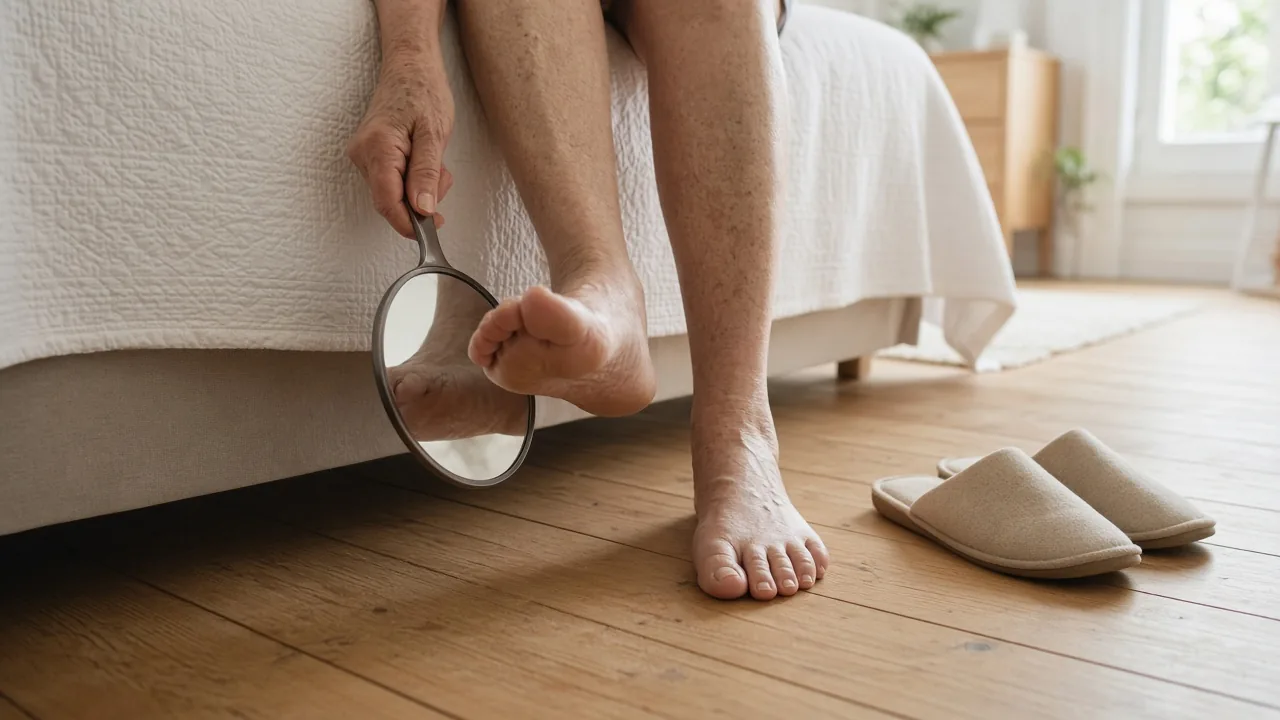
The Australian diabetes foot guidelines recommend daily inspection for foot problems for anyone at increased risk. Sit on the edge of the bed with a hand mirror, or ask someone at home. Look at the soles, heels, between every toe and around the nails. Look for blisters, cuts, red spots, swelling or anything new. Run your hand inside your shoes before you put them on too.
Wear shoes, inside and out
International guidelines advise people at risk not to walk without suitable foot protection, and that includes around the house. Thongs and bare feet on hot Queensland pavement in December are a real risk when you can't feel heat. Go for shoes with a firm back, enough room for your toes, a cushioned sole and a lace or strap to hold them on. Our guide to choosing shoes covers the basics, and if your feet have changed shape we can look at custom footwear.
Look after skin and nails
Moisturise dry skin on the heels but not between the toes. Don't cut corns or callus yourself or use corn pads with acid in them. Cut nails straight across, and if you can't see or reach them well, let us do it. Dry, split skin and nail problems are common entry points for infection. Our posts on cracked heels and ingrown toenails go into more detail.
Keep moving, and work on balance
Neuropathy raises the risk of falls. A 2025 umbrella review of exercise in diabetic neuropathy found possible benefits for symptoms, balance and day-to-day function, although the effect on falls and ulcers is still unclear. Walking, cycling, swimming (once your skin is checked) and simple balance work all count. Practise standing on one leg holding the kitchen bench. A night light in the hallway helps too.
What a podiatrist does
We can't repair the nerves, but we can help stop small problems turning into big ones. At a foot care appointment I'll test feeling with a 10 g monofilament, check the pulses in your feet, and look at your skin, nails and shoe wear. That puts you in a risk category, which sets how often your feet should be checked. The Australian guidelines suggest anywhere from every 12 months to every 1 to 3 months depending on risk. If you have diabetes, our diabetes summer foot care guide is worth a read.
If you have a chronic condition like diabetes, ask your GP whether a GP chronic condition management plan suits you. With one, some podiatry visits may attract a Medicare rebate.
Questions I get asked about this
Is cold water good for neuropathy?
It can feel soothing, but there's no good evidence it treats neuropathy. Keep any soak short and lukewarm, test the temperature with your elbow, and dry between your toes.
Do neuropathy sprays and creams work?
Low-strength capsaicin creams haven't been shown to beat a placebo cream. A high-strength patch applied in a clinic helps a minority of people. Cold and menthol sprays haven't been well tested. Ask your GP.
Is a foot bath safe if I have neuropathy?
It can be, with care. Numb feet can burn in water that feels fine to your hands. Keep it lukewarm and short, and keep heat packs and hot water bottles off your feet.
Do acupressure mats help neuropathy?
There's no good-quality evidence they do, and the spikes can break skin you can't feel. Check with your podiatrist first.
Can a podiatrist treat peripheral neuropathy?
We can't reverse nerve damage, and medicines belong with your GP. We test feeling, set your risk category, care for skin and nails, advise on shoes and check your feet regularly.
Feet numb, burning or tingling? Book a foot check and we'll test your sensation, look after your skin and nails, and work with your GP on the rest. Clinics at Caboolture, Beenleigh, Browns Plains and Victoria Point across South East Queensland.
Book an appointmentReferences & further reading
- Lazzarini PA, Raspovic A, Prentice J, et al. Australian evidence-based guidelines for the prevention and management of diabetes-related foot disease: a guideline summary. Med J Aust. 2023;219(10):485-495.
- Bus SA, Sacco ICN, Monteiro-Soares M, et al. Guidelines on the prevention of foot ulcers in persons with diabetes (IWGDF 2023 update). Diabetes Metab Res Rev. 2024;40(3):e3651.
- Murnion BP. Neuropathic pain: current definition and review of drug treatment. Aust Prescr. 2018;41(3):60-63.
- Derry S, Moore RA. Topical capsaicin (low concentration) for chronic neuropathic pain in adults. Cochrane Database Syst Rev. 2012;(9):CD010111.
- Derry S, Rice AS, Cole P, Tan T, Moore RA. Topical capsaicin (high concentration) for chronic neuropathic pain in adults. Cochrane Database Syst Rev. 2017;1:CD007393.
- Gracia-Sánchez A, López-Pineda A, Nouni-García R, et al. Impact of exercise training in patients with diabetic peripheral neuropathy: an umbrella review. Sports Med Open. 2025;11(1):75.
- Services Australia. Prepare a GP chronic condition management plan (GPCCMP) or case conferences. Australian Government.
This is general information, not individual advice. If you have new or worsening numbness, weakness or pain in your feet, please see your GP.